


Raga is Moving Beyond the Rage
The Delhi-bred rapper isn’t running from his demons, he’s rapping with them

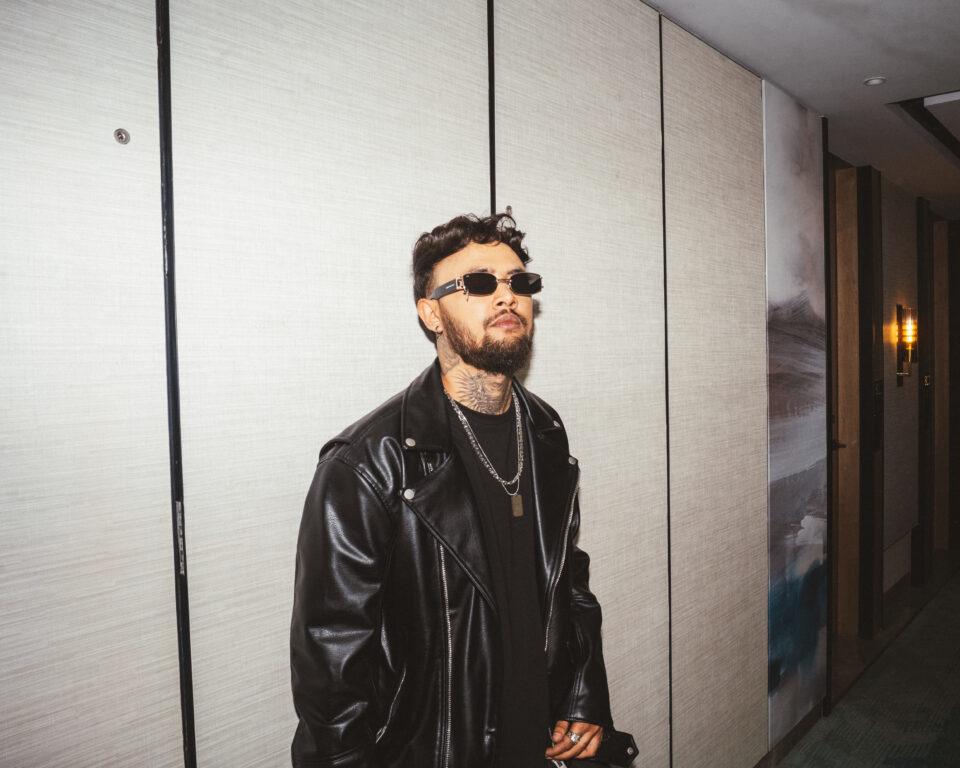
Photo by Sahil Madhwani
Even if Raga could go back in time and meet his younger self today, he still wouldn’t tell him to change a damn thing. The rapper, who hails from the streets of East Delhi, is sharp enough to know that every setback, every slip-up, and every bad decision armed him with the unrestrained honesty that defines his verses today. Known for his gravelly, raspy vocals, Raga—the moniker adopted by Ravi Mishra—spits immutable bars with a rare kind of conviction. His rhythm and rhymes are bursting at the seams with an almost primal intensity. And when they spill over, it’s absolute carnage.
Through tracks like “Shehar”, “Kheench Maari” and “Galat Karam”—which reflect on everything from the ruthless abandon of street life, to the flashy ambitions of the urban restless, to the wars waged against his inner demons—Raga established himself as one of the most assertive and untamable voices in the Indian hip-hop scene. But his most recent collaborative releases, “Bawe Mein Chak” (with King) and “Dhak Dhak” (with Aanchal Tygai and Rusha & Blizza) have slightly softer, less volatile undercurrents that feel more like aftershocks of emotion than a full-blown eruption. As he leans back on the couch at the Rolling Stone India office, verses slip out of him mid-conversation, like muscle memory. He often drifts into his own zone, following almost every answer with a wry laugh.
As we talk about everything from rage and regret to restraint and reinvention, it becomes clear that the razor-tongued kid from Jamnapaar, who once used anger like armor, may finally be ready to embrace a self-reflective vulnerability we haven’t seen from him before.
What it all boils down to: “Right now the spectrum has changed [to the] commercial side with ‘Dhak Dhak’ and ‘Kheench Mari’,” he admits candidly. “But the tracks that blew me up, woh toh bhai, they were for the hood, for the people. I’m like a dream for them: that they can be this too.” Even as Raga has steadily climbed the ladder of success—packing venues with every performance and even winning the title of a Squad Boss on MTV Hustle—he hasn’t forgotten where he came from. If anything, that rise has only pushed him to confront parts of himself he once kept buried. “There was a lot of anger in the tracks and me. But I was expressing less on [the] tracks and more in real life. Now, I’ve begun to like the idea of showing my vulnerable side. It’s like even a gangster can be vulnerable, and it can be shown without being sad about it.”

The shape-shifter: This evolution from desi hip-hop’s honorary ragehead to a more mature, self-aware artist wasn’t exactly intentional. Somewhere between the cyphers, freestyles, and jamming sessions with friends, Raga’s vulnerability crept into his verses—not as a weakness, but as a different kind of power. “[My friends and I] jam together at least four times a week,” he says. “We just plug in the mic and try to make different sounds work. What Raga can’t do may be true outside the room. But in here, Raga can do anything.” From singing in a lower baritone to straight-up screaming, Raga uses this studio time to push the boundaries of his sound, experimenting with different textures, tones, and flows to see just how far he can go. “That opened me up and [made me realise] that [I] was in my own shackles. I needed to break free from those.”
Though Raga makes sure he puts in the time, he isn’t too pressed when the inspiration doesn’t strike right away. He knows the words will find their way, he just wants them to be loaded with a purpose. “When you know how to rhyme and you can rhyme anything in 15 minutes, then [you have to ask yourself] what do you want the rhyme to mean? Does it make sense to me, and to the character [of Raga] and the timeline?” Especially considering the emotional depth he needs to tap into to create his music, the rapper knows he can’t rush it—he needs space to chill out, to step away. “That’s why I don’t force it. I don’t try to access the energy. I let the energy access me.”
The healing power of rap: For Raga, rap isn’t just a form of expression—it’s been his anchor, refuge, and salvation. “Rap has been everything to me. Even during my phase of drug addiction, rap ek rog ki tara tha (it was like a disease). Right from when I was in sixth standard, [this obsession with rap] never stopped. Back then, I ignored everything, including family, but not rap.” In the face of addiction, heartbreak, and trauma, Raga found solace in rap, using it as a way to channel his inner struggles by playing a character. “When I’m on the stage, in front of the cameras, in front of the mic, it’s this character that feeds me. I can translate my anger into art. I’m getting money out of it. So, it’s like a part of me, a best friend to me.”
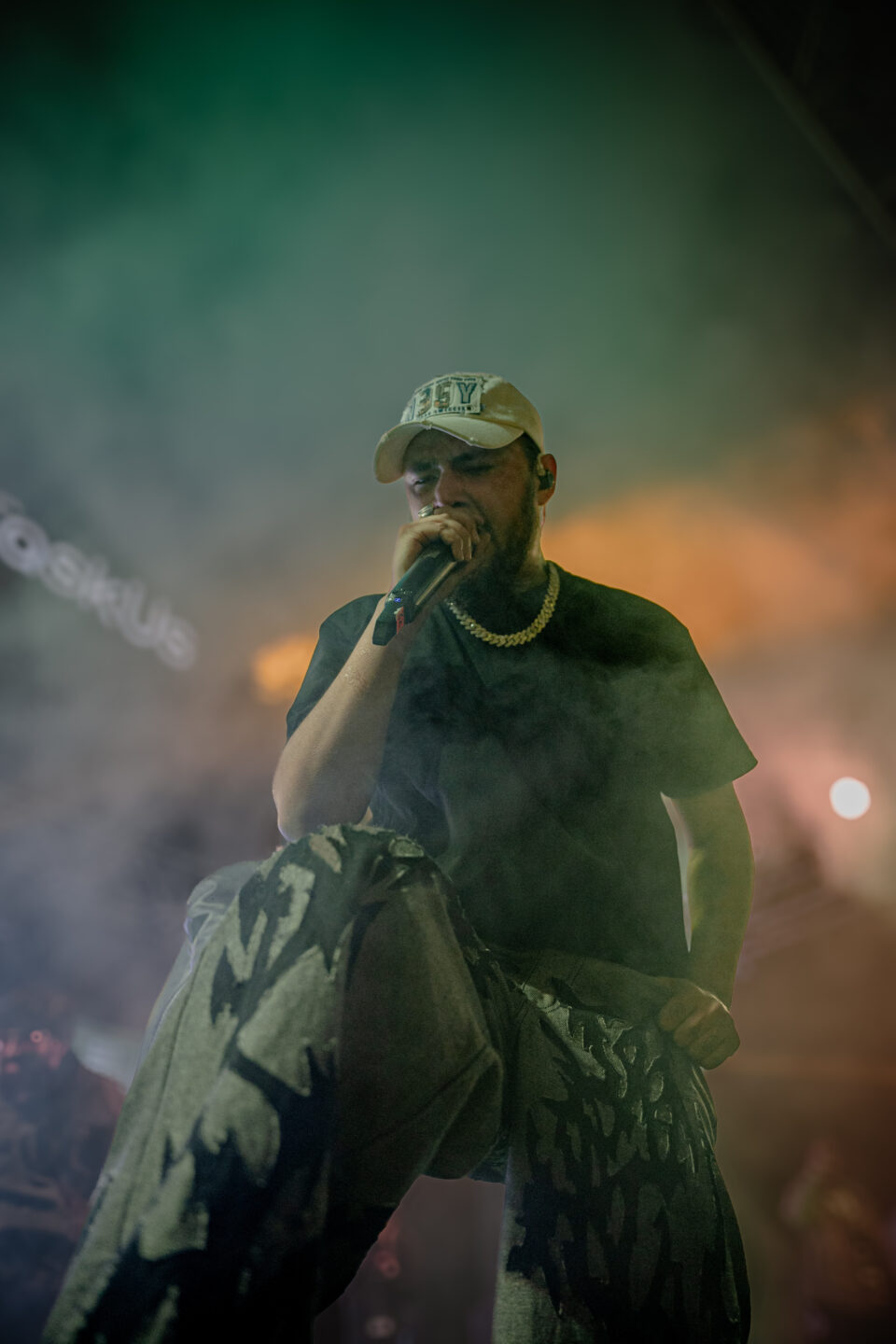
King of collaborations: With 28 collaborative features under his belt, Raga says that before he can click with the artist, he has to be able to click with the human. And once that bond forms, there’s no looking back. “That’s when the whole spectrum opens. With ‘Kheench Maari‘, I had the beat, but I knew I wanted to make it with DG (one of his closest collaborators). So I made sure never to play that beat alone so that no ideas come to my head [without him]. I just met him and we built out the song in 20 minutes.” He hints that a few more features are in the works, teasing an upcoming collaboration with Hashbass, as well as a new track with Afkap called “Hurt” which he describes as “pure, potent Raga.”
The future of music: Noting how the mainstream music industry has become more of a viral hit-producing factory, he feels that the future will be shaped by a wave of underground artists who don’t measure success through these metrics. “The real artists are now becoming rebels after seeing how the [commercial] industry has become. For example, recently, there was an artist who dropped 14,000 songs that were 30 seconds long. If you listen to them in a sequence, it’s a track. But it’s a protest against this [formulaic] culture.”
This story was edited at 4PM on Apr. 26, 2025, on the artist’s request to reflect changes in the artist’s plans.

